In Conversation: W.V. Quine - Dennett Interview: Section 6 of 9
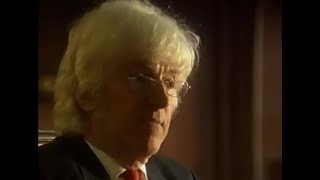
Willard Van Orman Quine, Professor Emeritus at Harvard University, has been described as the "greatest living English-speaking philosopher". In this series, he takes part in an in-depth personal interview, and a penetrating analysis of his life's work in six panel discussions with some of today's leading philosophers. In discussions with some of today's leading philosophers. In discussions on his most important theses, Quine defends his views against the major criticisms—past and recent—to bring his position right up-to-date.
The Dennett Panel
Daniel C . Dennett is Distinguished Arts and Science Professor and Director of the Centre for Cognitive Studies at Tufts University. Although his areas of specialization are cognitive sciences, philosophy of mind and philosophy of psychology, he has published on most philosophy topics. Professor Dennett has also brought his work to a wider audience, most notably with The Mind's Eye, co-authored with Douglas Hofstadter, and his bestselling Consciousness Explained.
The main objective in this program is to provide an overview of Professor Quine's major philosophical doctrines, and to invite him to comment on how he views thee doctrines now. The areas considered include his early association with logical positivism, his notorious skepticism about meaning, his stance on epistemology and ontology, and his characterization of philosophy as part of, or continuous with science.




#Comments
YOU NEED TO LOGIN IN ORDER TO COMMENT